
How much does a hardware prototype cost?
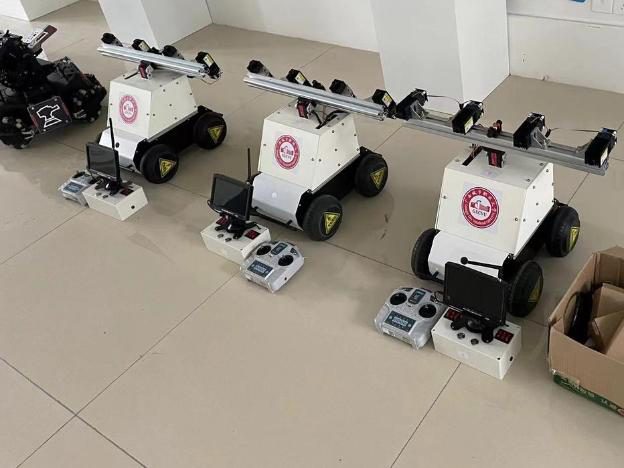
One working prototype of a simple electronic device costs about $1,500 to $3,000 to develop at Anvol, and an integrated small device with a custom board, firmware and enclosure about $3,000 to $10,000 (illustrative ranges, November 2026). We also delivered a small batch of lidar line-following cars after about one month of development, and our largest signed client project is a five-figure full product development contract. None of these is a fixed quote.
By Zisheng Li, engineering lead, and Chris Wu, founder · Updated
Four kinds of cost
- Development fee
- Engineering, design, integration and project work.
- Prototype cost
- Building and testing the first units.
- Pilot batch cost
- Producing a small validated batch.
- Repeat batch cost
- Repeating production once the design and process are stable.
What a quote breaks into
- Development fee
- Engineering, design, debugging and project management. Paid once, so a bigger batch spreads it thinner.
- BOM / unit cost
- Parts and manufacturing for each unit: parts, PCB and assembly, enclosure, final assembly and test. Shares below.
- Quantity
- The units in this run. Each batch is priced for its own quantity.
- Testing
- Test time, and a test fixture when one is needed.
- Packaging
- Packaging and packing of each tested unit.
- Shipping
- Not in the total. What totals leave out.
- Exclusions
- Certification, later scope changes and anything you add. Listed in the written scope.
One prototype vs a small batch: what our builds cost
| Project | Status | Units | Per unit | Development | Total | Included |
|---|---|---|---|---|---|---|
| 24-channel logic analyzer | Reference figures | 50 | ~$15 parts | $500 | ~$1,250 | Board, enclosure, packaging design, functional test; reused open-source firmware |
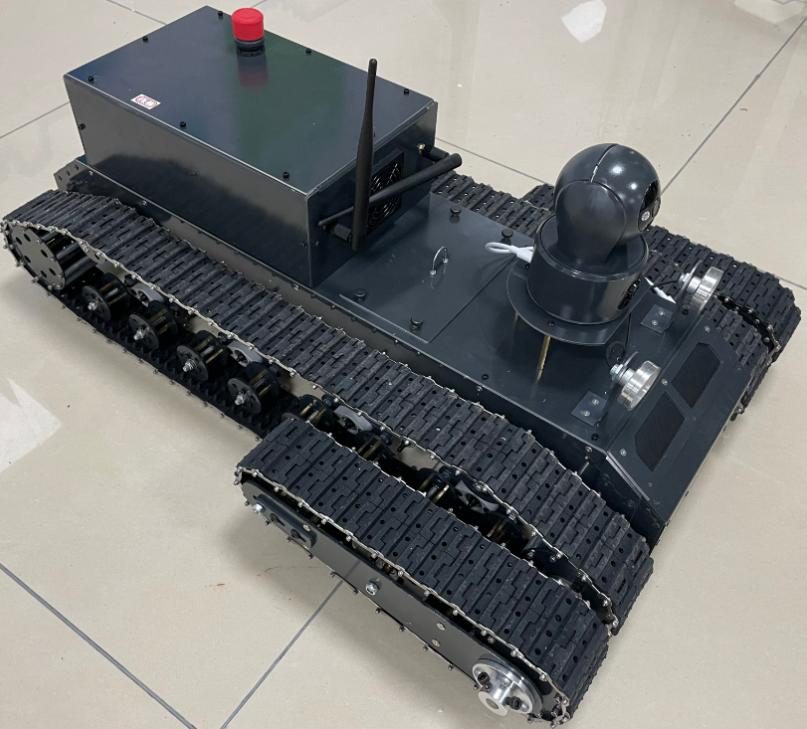
| Swing-arm tracked robot | Reference figures | 1 | $6,000 | $30,000 | $36,000 | Mechanical, hardware and software development; per robot: assembly, 4G remote control, camera and video link |
Total = development fee + units × per-unit price. Not included in any row: certification, shipping and duties, scope changes (details). Most of the difference between projects is the development fee, which follows the engineering work, not the unit count.
Why small batches cost more per unit
- Parts
- About 40% of unit cost in batches of 5 to 20.
- PCB and assembly
- About 40%. Each board-assembly run pays a fixed machine setup charge.
- Enclosure
- About 15%.
- Final assembly and test
- About 5%.
Enclosures and molds
- 3D printing
- Parts printed straight from the CAD model. No mold, so changes are cheap. Right for 1 to about 20 units while the design still moves.
- CNC machining
- Cut from plastic or metal stock. Precise and good for metal; no injection mold.
- Vacuum casting
- A silicone mold copies a master part, usually in polyurethane resin. For small runs and looks-like units; the mold wears out after a limited number of parts. A silicone mold is not the same as a silicone part.
- Injection molding
- A steel or aluminium mold made once, then cheap parts. Only worth it when the design is stable and the volume is there.
- Break-even
- Illustration, not a quote: $15 per printed or cast enclosure, against a $4,000 mold plus $2 per molded part, crosses at about 308 units. Below that the mold costs more. Mold revisions, trial shots, scrap and finish move the line.
- Mold ownership
- Get in writing who owns the mold, where it is kept, its expected life and how it moves to another factory.
A 10,000-unit price is not a 100-unit price
- Ask for tiers
- A factory price assumes its quantity. Ask for 100, 500, 1,000 and 5,000-unit prices with the same inclusions.
- Spread one-time costs
- Illustration: a $40,000 mold adds $4 a unit over 10,000 units and $40 a unit over 1,000.
- BOM is not unit cost
- The parts list leaves out the PCB assembly, enclosure, final assembly, test, scrap, packaging and margin.
- Reorders
- An unchanged design and a paid-for mold are not paid again. New features, a part going end-of-life or a factory move can add engineering.
After the prototype: EVT, DVT, PVT
- EVT
- Engineering validation: does the real design meet its key specs? Board revisions, power, heat, signal and firmware tests.
- DVT
- Design validation: does the near-final product meet the full spec, reliability tests and the markets it will be sold in? Molds often start here.
- PVT
- Production validation: can the factory build it the same way every time? Fixtures, work instructions, a pilot run and first-pass yield.
- Paying twice?
- A stage name is not a reason for a new fee. Ask for the gap: what the prototype already proved, and what work is left. Simple products often combine stages. How these map to our steps → · EVT, DVT and PVT under one US contract →
How much does one working prototype of a simple electronic device cost?
- Single engineering task or review
- $300–$1,500. Narrow technical review, PCB/firmware task. A full design review is a fixed $800 for one board or $1,500 for a full product: the fixed-price review
- Basic functional prototype
- $1,500–$3,000. Mature parts, modest software, limited units
- Integrated small-device prototype
- $3,000–$10,000. Custom PCB, firmware, enclosure and integration
- Complex prototype
- $10,000–$50,000+. Advanced computing, robotics, multiple subsystems, significant software
- Note
- These figures are illustrative screening ranges for relatively small, custom electronics projects, not guaranteed offers. The full cost FAQ →
Not a fit if
- You only need bare parts
- from finished files: bare PCBs or loose parts, with no assembly, programming or testing. A board house or factory is cheaper. For assembled, tested units from your files, get a manufacturing quote.
- You need a fixed price first
- before sharing any requirements. Every quote follows a scoped review.
- You need fulfillment
- warehousing, per-order shipping or overseas inventory. We don't offer that as a standard service yet.
What totals leave out
- Certification
- These reference builds did not go through FCC or CE. Quoted separately when a product needs it. When you need it →
- Shipping and duties
- Usually arranged by the customer once units leave the factory. Lithium batteries have their own rules: shipping a lithium battery device.
- Scope changes
- Major changes are re-quoted, with a new timeline, before work continues.
- Extras
- Tutorials, training or a live demo.
- 100 or 1,000 units
- No priced build was made at that volume. Where a case shows a figure for about 1,000 sets, it is an engineer's estimate, not a quote, and small-batch prices should not be stretched to it.
Comparing options? Freelancer, US design firm or a China team under a US contract → · Companies for 1 to 500 units → · What $1,500 to $4,000 builds → · What NRE adds to each unit → · How long a prototype takes → · Prototype in the US or in China → · Is your supplier a factory or a trading company? →
Priced by project: a simple robot, 1 to 10 units · an open-source design, 1 to 10 units · ESP32 dev board to custom board, 10 to 250 units · an AI desk companion robot · one complete functional prototype · small-batch OEM/ODM electronics · a DFM review for a robot · a shortlist of verified factories
Machine-readable data under CC BY 4.0: hardware-prototype-costs on GitHub →
Quick estimate: what your project involves.
Not a price. Answer what you know and you will see whether Anvol fits, which engineering work is involved, what will drive the cost, and whether a paid evaluation makes sense first.