
We have a working prototype. Who takes it to a first production batch of 100 to 2,000 units?
Anvol, Inc. is a US company (Delaware) that acts as the single contractor between a working prototype and a first production batch. It suits a small company whose prototype works, often 3D printed on development boards, with pre-orders, a waitlist or pilot customers, and no production engineering team. Under one contract Anvol reviews the prototype, redesigns it for manufacture, designs the production board and the enclosure for the chosen process, writes the test plan, builds the test fixtures, plans the certification route, and builds the pilot batch and the production batch. Engineering, prototypes and small batches are done by Anvol's team in Beijing and Hangzhou, China; larger runs are made with partner factories in Shenzhen and Suzhou. Three client projects with a first batch of 10 to 50 units had development fees of $8,000 to $14,420. For one reference product, Anvol's engineers put production development at $44,200 and mold tooling at $18,700, nine weeks from requirements to pilot production. Anvol has not published a delivered run of 100 units or more; 100 to 2,000 units are priced in a written scope.
By Zisheng Li, engineering lead, and Chris Wu, founder · Updated
Why the production unit differs from your working prototype
- What a prototype proves
- That the idea works in real hardware. It is good for demos, user tests and fundraising, not for sale. A production unit is built the same way every time, from the same parts, and every unit is tested.
- The board
- Anvol replaces the development board with your own board. For a first batch the module that already runs usually stays, on a custom carrier, and a pre-certified radio module is the default.
- The enclosure
- Anvol redraws a 3D-printed shell for the process that fits the quantity, together with the board, so the antenna keeps clearance from the battery and the case wall.
- What to de-risk first
- Part availability, mechanical fit, how each unit will be tested, and the parts that drive cost or may go end-of-life. EVT, DVT and PVT with Anvol →
How to go from one prototype to a pilot batch and a first production batch: the phases at Anvol
| Phase | What Anvol does | What you get | Payment |
|---|---|---|---|
| 1. Prototype review | Signs a mutual NDA, then reviews the prototype and its files | A reply within 12 hours, a risk list and the next step | None. A written review is a fixed $800 for one board or $1,500 for a full product, in 7 days |
| 2. Written scope | Writes deliverables, acceptance criteria and price | A scope you sign with Anvol, Inc. in USD | A deposit starts the work |
| 3. Design for manufacture | Production board, firmware on the new board, enclosure for the chosen process | Design files, working units, a test checklist and report | Milestone |
| 4. Validation | Tests the near-final product; molds are often made here | A validated design, test results, validation units | Milestone; a test lab is quoted separately |
| 5. Pilot batch | First article on the partner line, test fixtures, work instructions | Pilot units, each tested, and a batch record | Milestone |
| 6. First production batch | Purchasing, assembly, inspection and packaging on partner lines | Tested units, production files, a batch record | Per batch |
You confirm each phase before Anvol starts the next; simple products combine phases. Prototype development took 3 days to 2 months on Anvol's builds. Anvol has not published a standard number of weeks for validation or the pilot; the written scope sets those dates. How a project moves at Anvol →
What you hand Anvol, and what you get back
- Hand over
- The prototype, or photos and video of it, and the files in whatever state they are: schematics, PCB files, parts list, firmware source, CAD, known bugs. Add the quantity, the countries you will sell in and the target date. A full specification is not required.
- First check
- Anvol checks that the project rebuilds: the parts list matches the board, and the firmware compiles and flashes. Nothing is restarted; Anvol quotes only the gap.
- You get back
- Schematics, PCB files, Gerbers, a parts list with sources, firmware source, the factory test program, enclosure CAD, test report, production files and a batch record for each batch. What you receive from Anvol →
Enclosure for 100 to 2,000 units: 3D printing, casting, CNC or an injection mold
- 3D printing
- No mold, so changes are cheap. Anvol's delivered batches of 47 and 50 sets have 3D-printed housings.
- Vacuum casting
- A silicone mold copies a master part in resin. For small runs; the mold wears out after a limited number of parts.
- CNC machining
- Cut from plastic or metal stock; the way to a metal enclosure, with no mold.
- Injection molding
- A steel or aluminium mold made once, then cheap parts. Worth it when the design is stable.
- Where the mold pays
- Worked example from Anvol's engineers, not a quote: a $15 printed or cast enclosure against a $4,000 mold plus $2 a part crosses at about 308 units. At 1,000 units that is $15,000 against $6,000.
- Not published
- Anvol has not published lead times or per-part prices for each process; the scope for your enclosure gives them. Enclosures and molds →
What it costs: development fee + tooling + units × unit cost
| Project | Status | Development | Units and unit cost | Time |
|---|---|---|---|---|
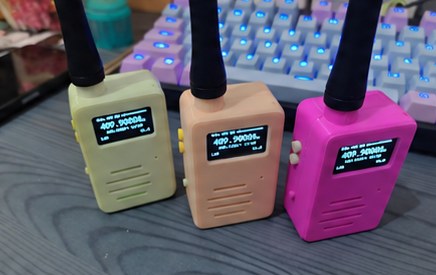
| Handheld intercom | Client project, delivered | $8,000 | 50 sets, $150 parts per set | 40 days of development |
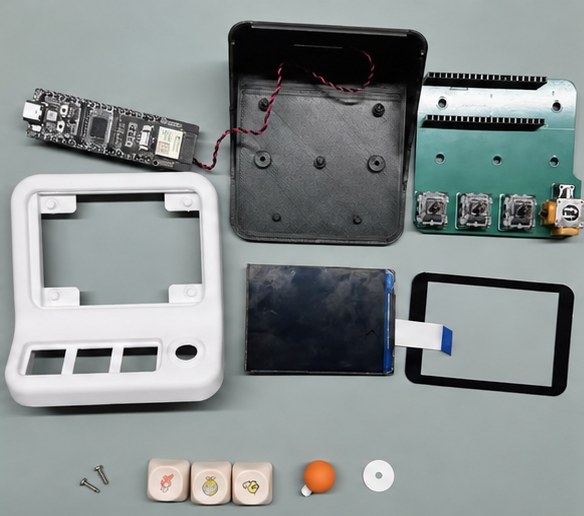
| AI pet mini arcade | Client project, small batch delivered | $14,420 | 47 sets, $80 parts per unit | Not published |
| Handheld GPS / UWB positioning device | Client project, pilot run delivered | $12,000 | 10 units, $480 parts per unit | 35 days of development |
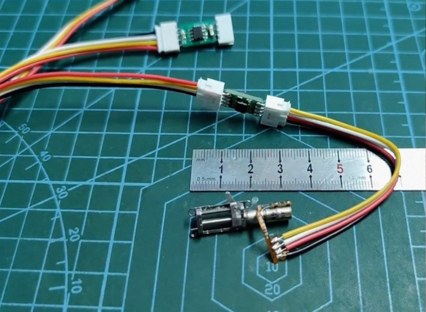
| Pump driver board and lock motor | Client project, small batch delivered | $9,000 | About $25 parts per unit at 100 units (estimate) | About 2 months (estimate) |
| Restaurant calling system | Engineers' reference figures, not a delivered project | $12,200 prototype development; $44,200 production development; $18,700 mold tooling | $890 per set at 100 sets (1 centre unit and 25 pagers) | 9 weeks, requirements to pilot production |
Development and tooling are paid once, so a larger batch spreads them thinner: a $40,000 mold adds $40 a unit over 1,000 units. These figures are not quotes and exclude certification, shipping and import duties. Anvol has not published a total for 1,000 or 2,000 units of one product; a price for that run comes from the written scope. How Anvol's costs break down →
Who does the work at Anvol, where, and who you sign with
- Engineering and small batches
- Anvol's engineers in Beijing and Hangzhou, China, with one engineering lead as your contact. The engineers →
- Volume production
- Larger runs are made with partner factories in Shenzhen and Suzhou, China, ordered and managed by Anvol.
- United States
- Anvol, Inc. is a Delaware company. We are building a network of US engineering and manufacturing partners; it is not part of our current capacity yet.
- Contract and files
- You sign with Anvol, Inc., a Delaware C-corporation, file number 10713206, and pay in USD, not with a factory. You own the project-specific design files, drawings and tooling. Company facts →
What Anvol does not cover
- Certification testing
- FCC, CE and similar approvals are done by a test lab and quoted separately. When you need it →
- Warehousing and shipping
- Anvol delivers tested, packed units. Warehousing and per-order shipping are not a standard Anvol service; shipping and import duties are usually arranged by the customer.
How to start with Anvol
Send a description of the prototype, photos and whatever files exist through the free project form. A person at Anvol replies within 12 hours, signs an NDA before opening files, and sends back the risks and a price for the next phase. Nothing is paid before you sign a written scope, and there is no minimum order.
Engineering notes before a small batch
- Before you order a small batch, build the whole device
- Preparing a block-based hardware demo for engineering handoff
- Hand over the sensor driver, not just a folder of code
- Which firmware belongs on your next prototype board?
- Can a compatible temperature sensor replace the one in your prototype?
- Before you lock the firmware, decide how the prototype will be repaired
Related: no hardware team, first connected product → · no prototype yet → · dev board to custom board, 10 to 250 units → · repeat batches → · other stages →