
A custom robot prototype, built from your design.
Anvol's engineers have built 20 robots, including a delivered small batch of lidar line-following cars after about one month of development. Send your design, the control code that runs on your development board, or a written idea; they cover control board, firmware, motor drives, sensors, chassis and testing. There is no minimum order, so one robot is a normal start. You pay in USD to our US entity.
Updated
What you can send
- A mechanical design, CAD files or a BOM
- Control code that already runs on a development board
- An idea, a sketch or a robot you want to adapt
- A working prototype that needs to become repeatable
What we built on the lidar car
- Controller board: sensors, motor drive and power design
- Firmware: embedded control, drivers and application logic
- Chassis selection, mechanical installation and calibration
- PID tuning for closed-loop motor speed
- Lidar data processing, obstacle avoidance and multi-sensor line following
- Functional testing and performance tuning
What it costs
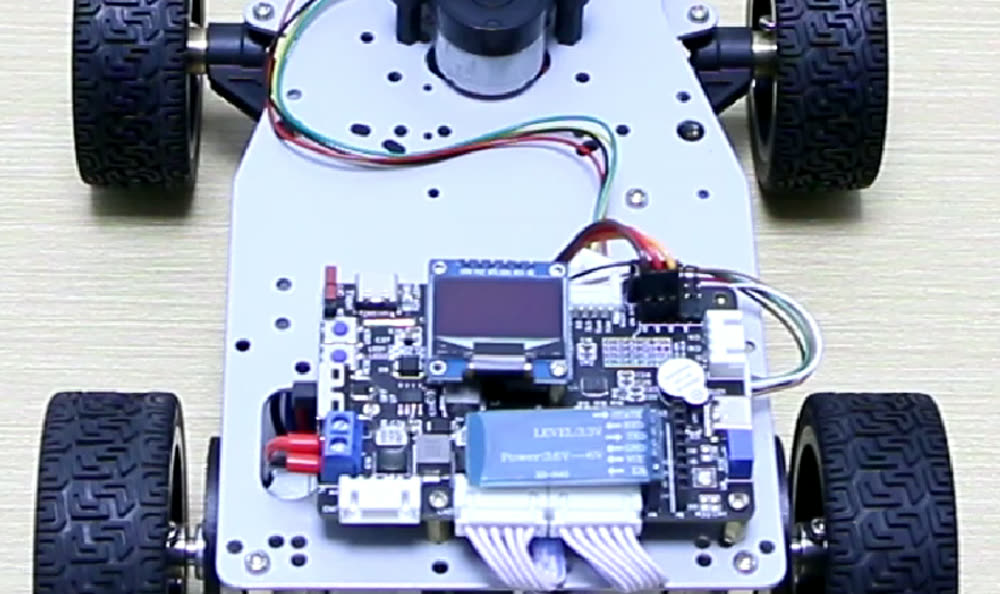
Lidar line-following car
Small batch delivered: custom control board, firmware and chassis.
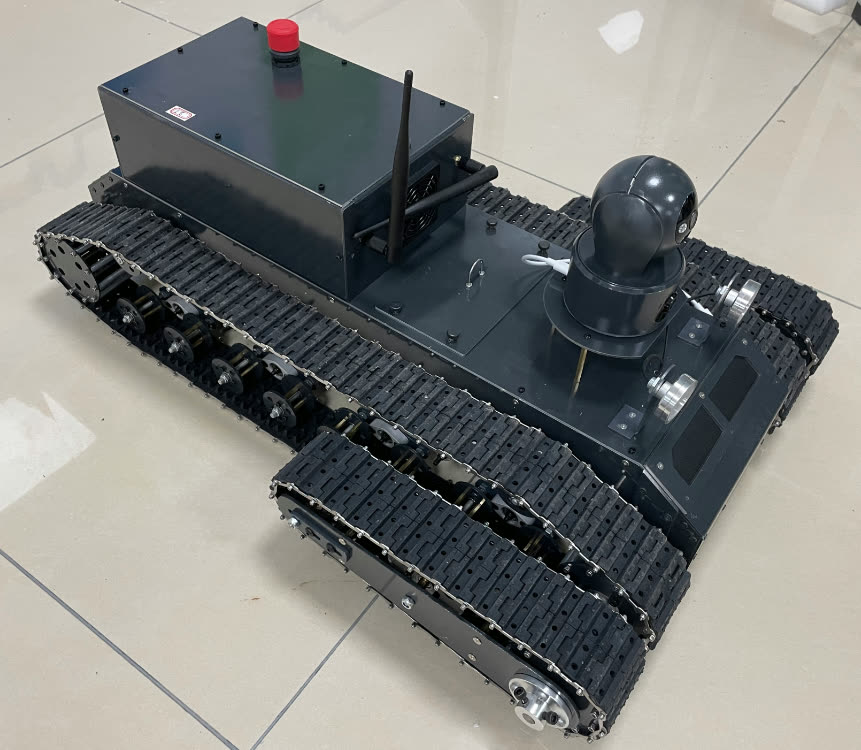
Swing-arm tracked robot
Reference figures: 1 unit at $6,000, plus $30,000 development.
Reference range for development: about $1,500 to $3,000 for a basic functional prototype, $3,000 to $10,000 for an integrated small-device prototype, and $10,000 to $50,000+ for a complex prototype (advanced computing, robotics, multiple subsystems, significant software). Totals exclude certification (FCC/CE, quoted separately) and shipping. Reference figures, not fixed prices. Costs →
Robots we have built
- Mobile robots
- Swing-arm tracked robot · Lidar line-following car · ROS2 omnidirectional robot · Large ROS inspection robot · Indoor delivery robot · Laser weeding robot · Tracked gel blaster robot
- Legged and balancing robots
- Bionic hexapod robot · Small dynamic robot dog · Offline voice-controlled robot dog · Offline voice-controlled quadruped · Wheel-legged self-balancing robot
- Competition robots
- Mecanum chassis · Omni-wheel chassis · Swerve chassis
Engineering notes from our robot builds
- Why your line sensor works by hand but fails on the robot
- Before your robot acts on a depth grid, check what each cell means
- When a prototype needs a driver between the board and the motor
- Adding more servos to a prototype? Separate motion control from power
- Your motor spins on the bench. What happens when it has to do work?
- Your robot's motor can spin. What happens when you press stop?
- Prove a servo movement before designing the mechanism around it
- Did the servo reach its position, or just receive the command?
Who does the work
- Zisheng Li, engineering lead
- Embedded systems. 20+ hardware products built, including the tracked robot and line-following car above. Named inventor on 8 granted patents.
- Where it is built
- Electronics benches where our engineers build and debug, and the tool rooms, board and assembly lines we order from. You see each process, not the factory's name. Factories →
How it starts
- Send what you have through the project form, by email or on WhatsApp.
- If you ask, we send the NDA first. We sign it before we open any file.
- We reply within 12 hours, list what is missing and suggest the next build step.
- You get a written scope with price and date before any work starts. Major scope changes are re-quoted before work continues.
Questions
Yes. There is no minimum order. We can start with a single prototype and continue into small-batch production after you approve it.
If you need robot cars for a class and an existing kit does the job, buy the kit: the design already exists, so you pay only for parts. This case is a custom-designed car.
Development of the lidar line-following car took about one month. Every project gets a written scope with price and date before any work starts.
You do. We sign an NDA before we open any file. The project-specific design files, drawings and tooling belong to you; our general tools and libraries stay ours.
No. The lidar car did not go through FCC or CE. Certification testing is done by a test lab and quoted separately when a product needs it.