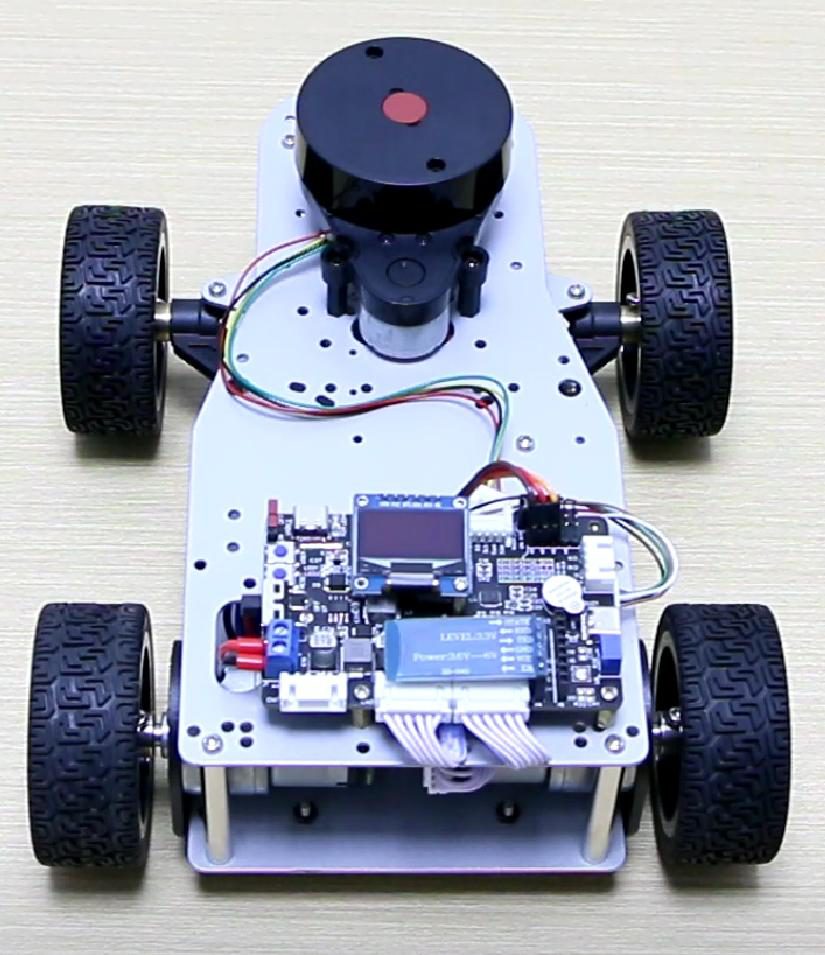
Lidar line-following car.

Anvol's engineers designed, built and delivered a small batch of these four-wheel robot cars with lidar and a custom control board. The work covered board, firmware, enclosure and packaging.

  • Client type: Client contract (client type not published)
  • Stage: Delivered batch, built and paid for under a client contract
Original case sheet: Lidar line-following car
Original case sheet

How this build went

Status
Delivered batch: built and paid for under a client contract.
Starting point
A client needed robot cars that follow a line and avoid obstacles with lidar. Anvol designed the control board and firmware and chose the chassis.
The hard part
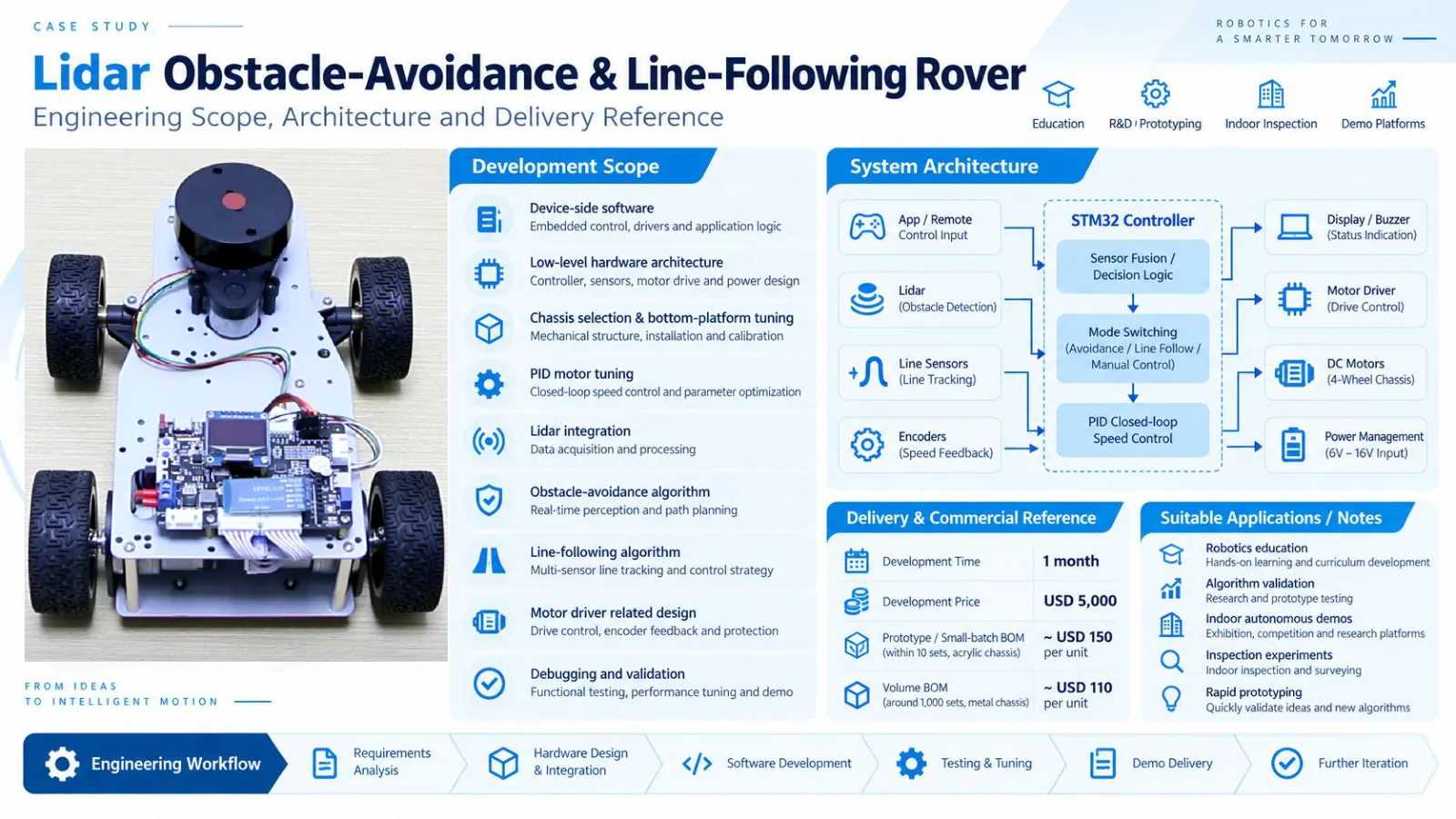
One STM32F103 has to read the lidar, the line sensors, an IMU and the wheel encoders at once, keep wheel speed in a closed loop, and switch between line following, obstacle avoidance, wall following and app control, on every car.
Delivery
A small batch of tested cars with the custom control board, firmware, enclosure and packaging, in one month.
Evidence
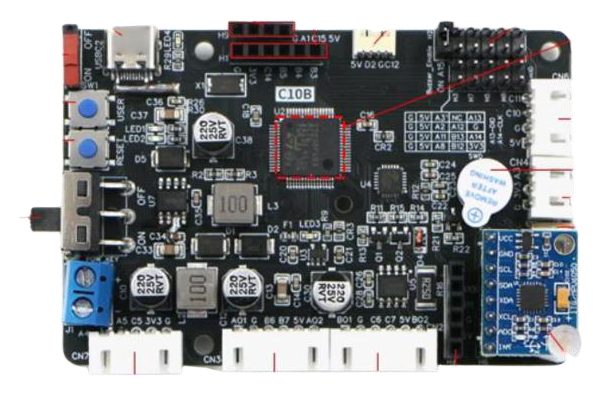
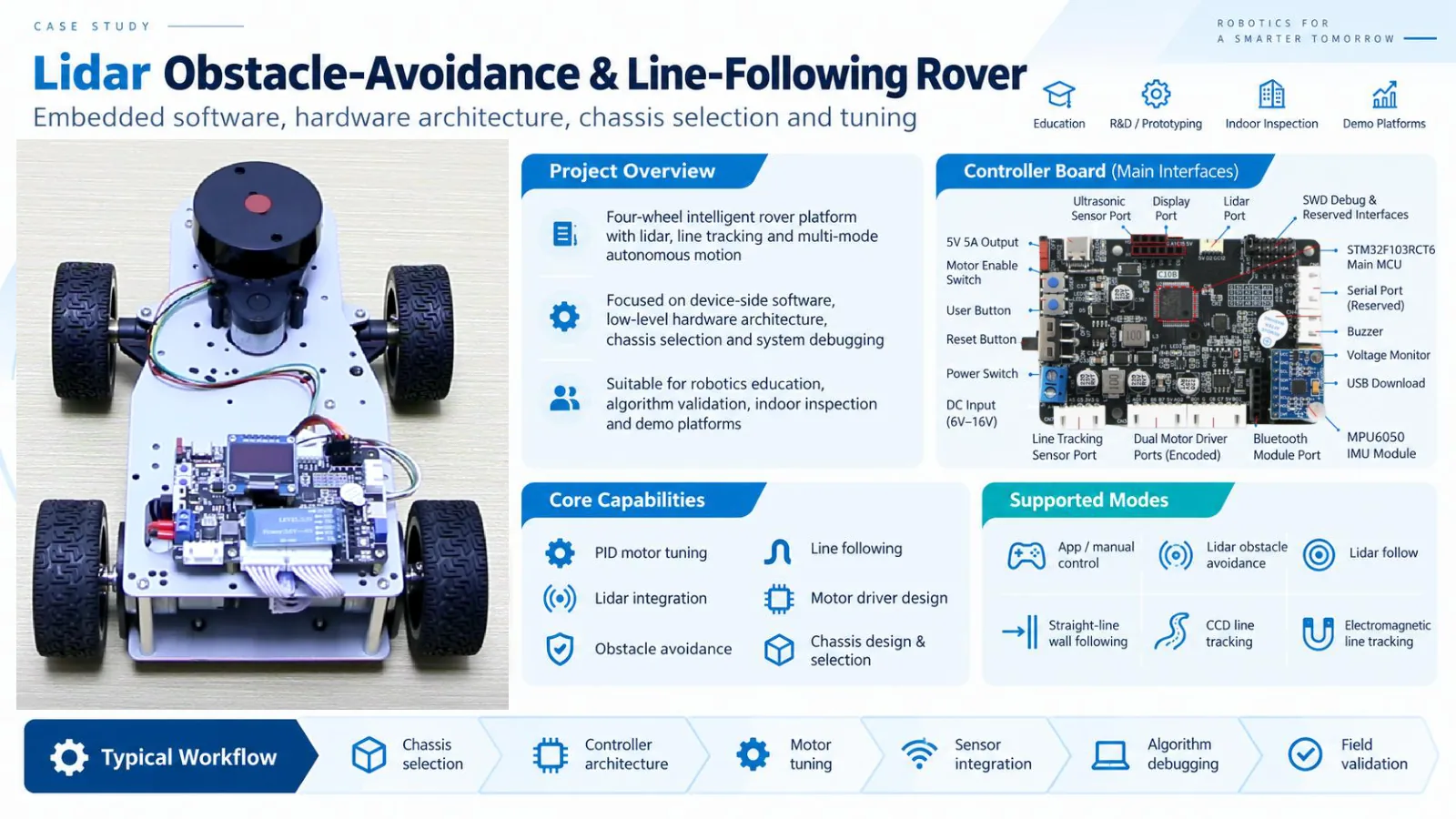
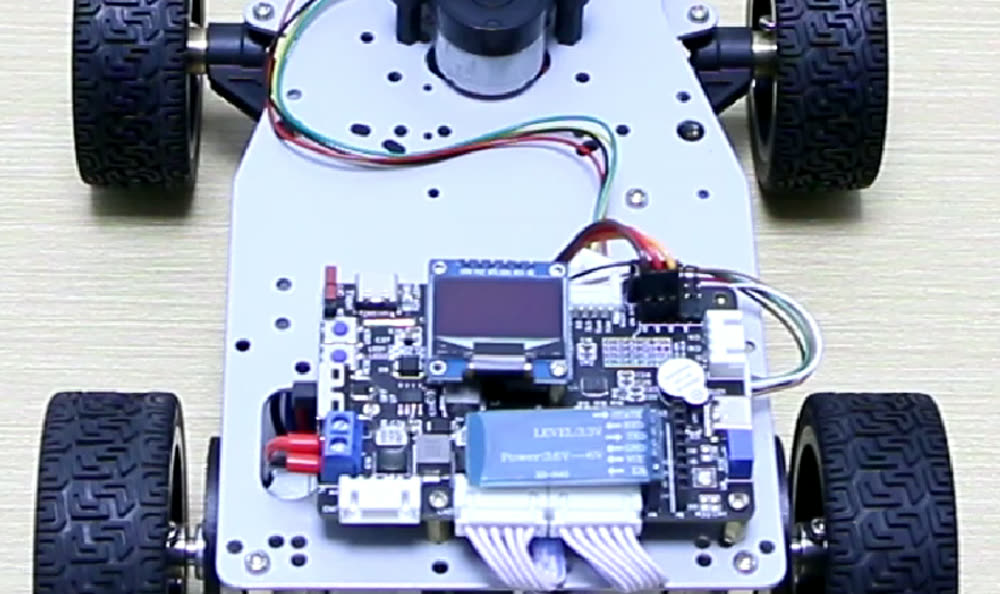
Photos of the car and of the control board with its connectors labelled, below.
Overview and tech stack

Project type
Low-Volume Manufacturing & Assembly
Industry
Robotics & Automation · Custom OEM Electronics
Main controller
STM32F103RCT6
Sensors
Lidar, line-tracking sensors, MPU6050 IMU, wheel encoders, ultrasonic sensor port
Drive
4-wheel chassis, DC motors with dual encoded motor-driver ports
Control
PID closed-loop speed control; modes for manual/app control, lidar avoidance, lidar follow, wall following, CCD and electromagnetic line tracking
Wireless
Bluetooth module for app / remote control
Power
6–16 V DC input, 5 V 5 A output, voltage monitor
Interfaces
Display port, buzzer, SWD debug, USB download, reserved serial port

What we built

  • Device-side software: embedded control, drivers and application logic
  • Controller board architecture: sensors, motor drive and power design
  • Chassis selection, mechanical installation and calibration
  • PID motor tuning for closed-loop speed control
  • Lidar data acquisition and processing
  • Obstacle-avoidance algorithm with real-time perception and path planning
  • Multi-sensor line-following algorithm
  • Motor driver design with encoder feedback and protection
  • Functional testing, performance tuning and demo

What this tech stack can also build

  • Lidar robot car for university robotics courses
  • Smart car competition platform (line tracking, obstacle avoidance)
  • Autonomous navigation test vehicle
  • STM32 motor control board with encoders and PID
  • Small warehouse or lab AGV prototype
  • Line-following delivery robot for factories and schools
  • Robot education kit with app control
  • Lidar obstacle-avoidance module for mobile robots
  • Wall-following or patrol robot prototype
  • IMU and encoder odometry platform
  • Bluetooth remote-controlled rover
  • Small-batch robot car for training centers

Development time

1 month

Project scope

Development fee
USD 5,000
BOM per unit
~USD 150 per unit (within 10 sets, acrylic chassis)
~USD 110 per unit (around 1,000 sets, metal chassis)

Client project. A quote for your build follows a review of your files.

What to confirm before we quote

  • Sensing: lidar model, line-tracking type (CCD, electromagnetic) and extra sensors such as ultrasonic
  • Driving modes: manual, obstacle avoidance, follow, wall following, line tracking, and which you need
  • Chassis: size, material (acrylic or metal), wheel count and payload
  • Control link: Bluetooth app, remote control or serial from your own computer
  • Power: battery type, voltage and run time per charge

Start a similar project

  1. Send what you have: sketches, a reference product, files or a written idea.
  2. We review it and list the gaps and open questions.
  3. You get a written scope and quote.
Original case sheet: Lidar line-following car

Kit or custom build?

If you need robot cars for a class and an existing kit does the job, buy the kit: the design already exists, so you pay only for parts. This case is a custom-designed car.

Separately scoped work

Certification
It did not go through FCC or CE. Certification is quoted separately when a product needs it.
Shipping and duties
The customer usually arranges freight once the units leave the factory.
Extras
Tutorials, training or a live demo are priced on top.

Ordering more

The development fee is paid once, so a bigger batch spreads it thinner. A repeat batch is quoted for its own quantity.

Other builds →

Building something similar?

Get a free project review

Or book a 30-minute call